
PART 1 OF 5
The African Way
Chapters 1-4: Foundations of learning rooted in African wisdom, accessed through innovation, built for everyone.
The Boy Who Could Not Attend Harvard
Keyword: home-based university education Africa
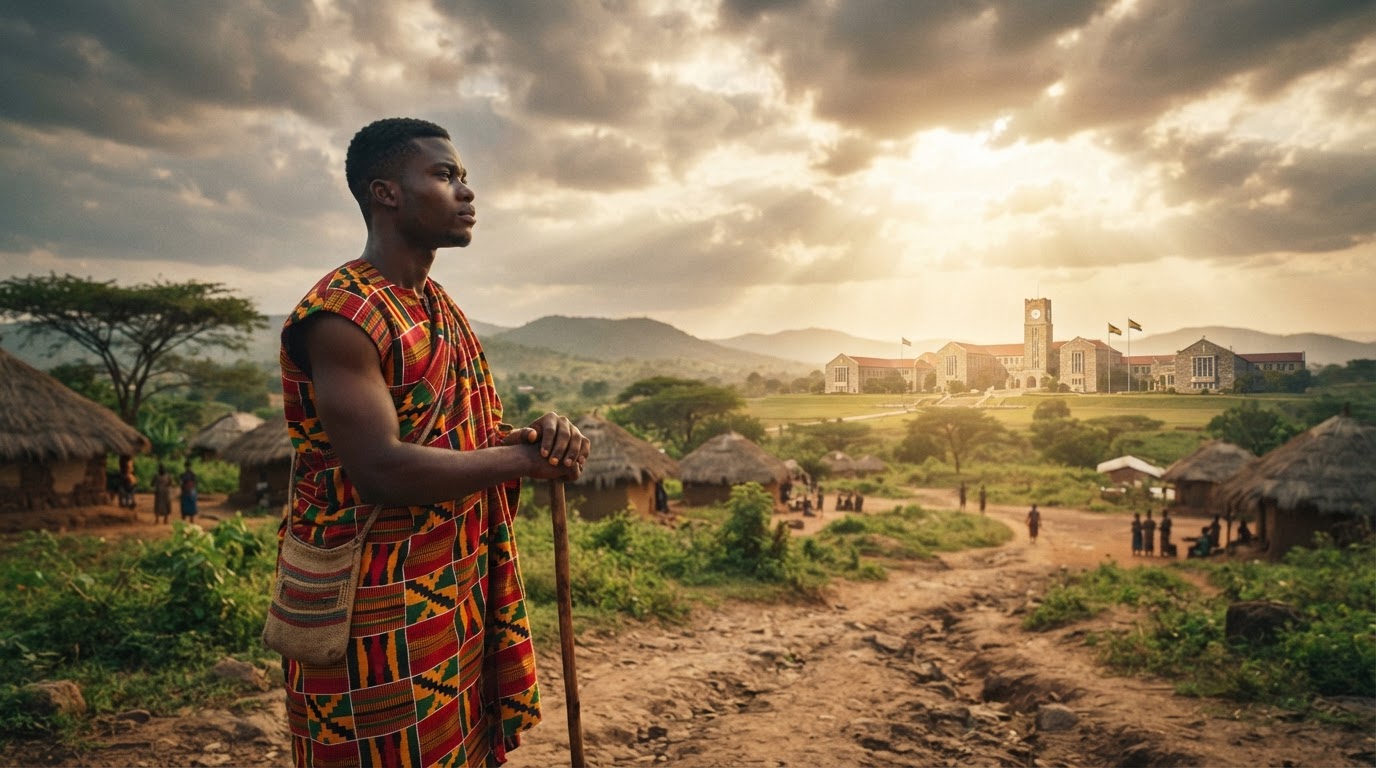
Simon watches his classmates pack their bags for distant universities. He sees the weight of their parents' sacrifices, the hope in their eyes, the certainty that their futures are now secured by four years away from home.
He is not among them.
At seventeen, Simon faces what millions face: the gate of formal education has closed. Not because he lacks intelligence. Not because he lacks hunger. But because resources, distance, and circumstance have made the traditional path impossible.
In that moment, something breaks inside him. And something else awakens.
If the gate is closed, he thinks, I will build my own door.
This is the origin of Repe Future — the one who lives in tomorrow, today. A young man who refuses to accept that learning requires permission. That education belongs only to those who can afford it. That knowledge has a price that excludes him.
Instead, he asks a different question: What if I could learn at home? What if I could build university-level knowledge without leaving my community?
And more radically: What if I could prove that this is not just possible — but superior?
Actionable Steps for This Chapter
- 1. Identify what you believe is impossible for you
- 2. Ask yourself: Is this truly impossible, or is the path just different?
- 3. Write down three ways you could achieve your goal without the traditional route
- 4. Research alternatives that align with your resources and circumstances
Guides Within This Chapter
How to Accept a Closed Door
The first step is not denial. It is clarity. Acknowledge what is and what is not available to you right now.
How to Open Your Own Door
Once you accept limitations, innovation becomes possible. You stop fighting the wrong battle and start building new paths.
How to Claim Your Right to Learning
Knowledge is not a privilege. It is a birthright. Anyone can learn. The question is not ability — it is access.
🤖 Ask the AI Tutor
Have questions about this chapter? Ask the BISONGSIMONTV AI Tutor for instant guidance and deeper insights.
Chat NowWisdom Under the Mango Tree
Keyword: African way of learning
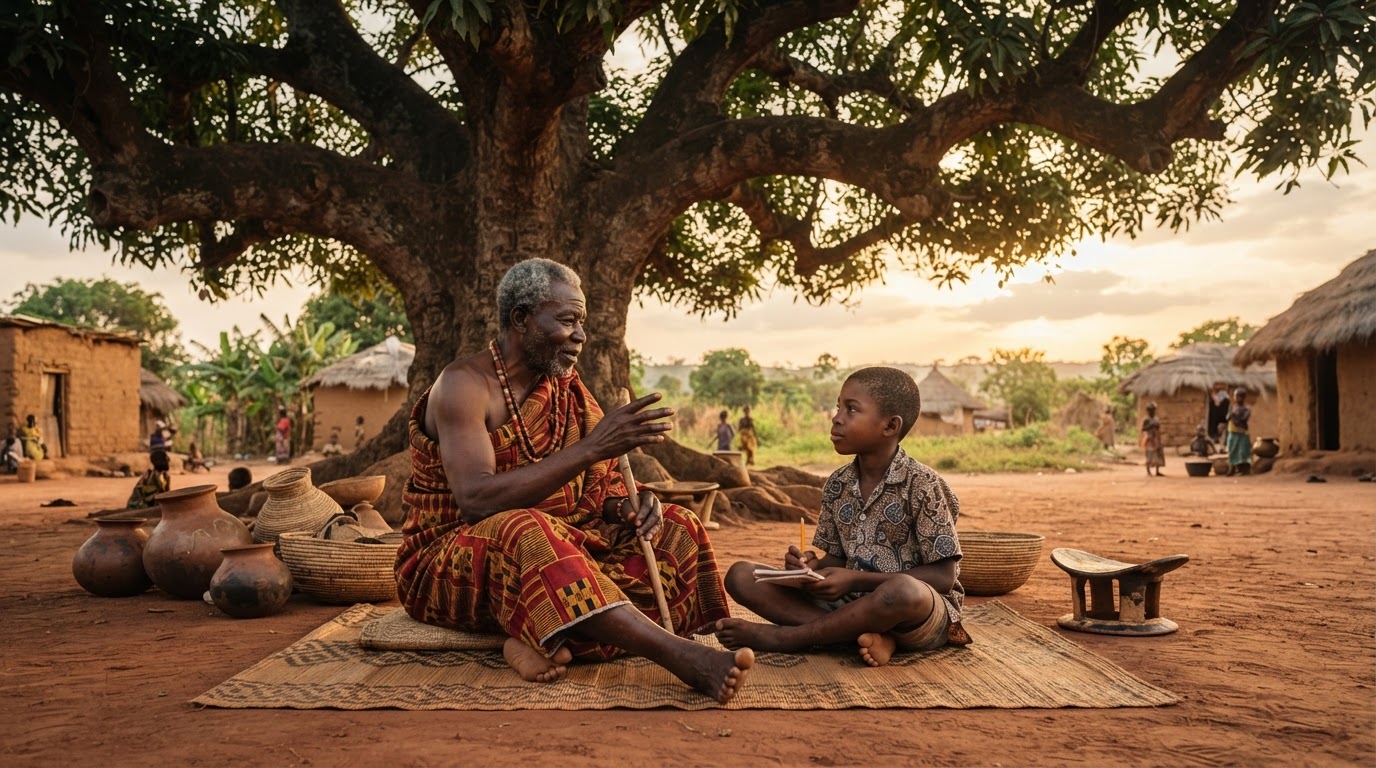
Simon sits under the ancient mango tree with Elder Kofi, a man whose hands have built houses, whose voice has guided communities, whose life is a curriculum that no university teaches.
"You think the gate is closed," Elder Kofi says, watching the horizon. "But you are mistaken. The gate you are looking for was never the real gate. That is a gate built for someone else's journey."
Simon listens.
"In Africa, learning has always been like this tree," the elder continues. "Roots deep in the earth. Branches reaching for the sky. Fruit given freely to those who reach. Not behind a wall. Not locked in a building. Available to anyone willing to climb."
This is the moment Simon understands: Western education is one way to learn. But it is not the only way. It is not even the original way.
For thousands of years, African knowledge was transmitted orally, practically, communally. Elders taught through stories. Mentors taught through apprenticeship. Families taught through participation. Knowledge was alive, contextual, relevant.
The African way did not require credentials. It required commitment.
Simon begins to see his situation differently. Not as a limitation. But as a return to something older, deeper, more authentic.
He is not failing to fit into Western education. He is awakening to an African way of learning that was always there.
Actionable Steps for This Chapter
- 1. Identify the wisdom keepers in your family and community
- 2. Schedule time to learn from them — not through formal sessions, but through presence
- 3. Ask them to share their knowledge, their stories, their frameworks
- 4. Document what you learn in a personal knowledge journal
Guides Within This Chapter
The Oral Tradition: Learning Through Stories
African teaching uses narrative to convey complex wisdom. Listen to your elders' stories. The lessons are embedded in the narrative.
Apprenticeship: Learning Through Doing
Real skill is learned by doing alongside someone who knows. Offer to work with masters in your community. Observation is education.
Communal Knowledge: Learning Together
African learning was never solitary. It happened in community. Find or build your learning community. Growth accelerates in groups.
🤖 Ask the AI Tutor
Have questions about this chapter? Ask the BISONGSIMONTV AI Tutor for instant guidance and deeper insights.
Chat NowThe Library in His Pocket
Keyword: online self-education
A secondhand phone. A weak internet connection. A hunger that cannot be stopped.
Simon's breakthrough comes not from wealth but from resourcefulness. The phone is old, scratched, sometimes slow. But it is his library. His university. His connection to the world's knowledge.
He downloads everything he can access. Books. Lectures. Courses. Tutorials. He learns what bandwidth allows. He studies what his data plan permits. He creates a personal curriculum using free and affordable resources.
This is the birth of Repe Future — the one who lives in tomorrow. Not because he has access to elite resources. But because he has learned to access what exists, to extract maximum value from minimal resources, to transform limitations into innovation.
The smartphone becomes his proof of concept. Knowledge is available. The barrier is not access — it is intention.
Millions of Africans have phones. Millions have internet. Most do not use it for self-directed learning. Simon does. He becomes an early proof that home-based, self-directed, technology-enabled education is possible — right now, on the tools most of us already have.
His transformation is not spectacular. It is quiet. Daily. Disciplined. A young man in a village, studying on a secondhand phone, building knowledge that no traditional system recognized but that gave him power no certificate could measure.
Actionable Steps for This Chapter
- 1. Take inventory of the learning tools you already have
- 2. Identify 5 free or low-cost platforms for your field of study
- 3. Create a 90-day learning plan using available resources
- 4. Commit to one hour daily of focused self-directed learning
- 5. Document your progress and insights
Guides Within This Chapter
Free Learning Platforms: Building Your Digital Campus
Coursera, Khan Academy, edX, YouTube, Udemy free courses, Project Gutenberg, Google Scholar. Your campus is now free and global.
Creating a Personal Curriculum
Universities structure knowledge. You can too. Decide what you want to learn, sequence the courses, and commit to completion.
Optimizing Limited Resources
Slow internet? Download when you can. Limited data? Prioritize. Low battery? Study offline. Resourcefulness beats resources.

🤖 Ask the AI Tutor
Have questions about this chapter? Ask the BISONGSIMONTV AI Tutor for instant guidance and deeper insights.
Chat NowA Continent of Hidden Scholars
Keyword: African education platform
Simon's realization is both liberating and humbling: he is not alone.
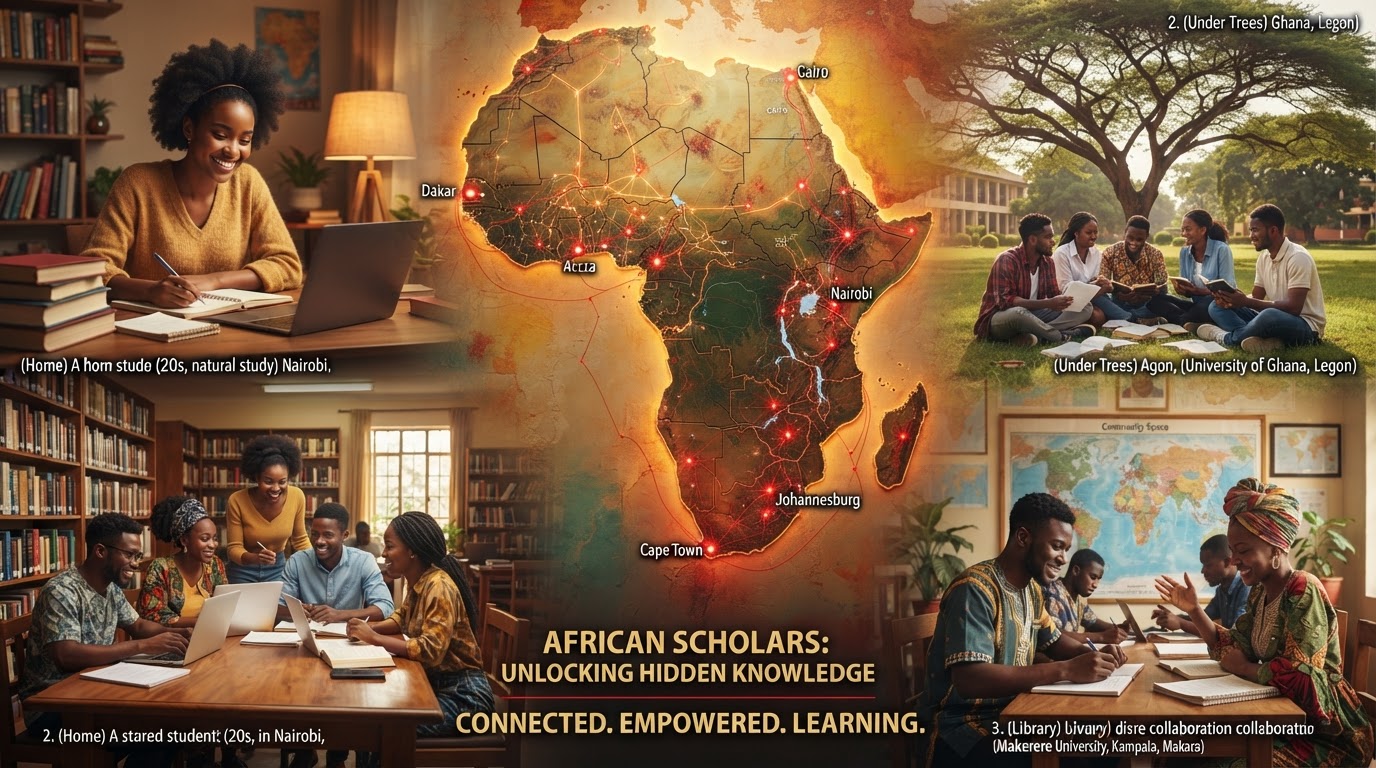
Across the continent, thousands of young Africans are doing exactly what he is doing. Learning at home. Building knowledge without credentials. Teaching themselves and their communities. Creating solutions that formal education never imagined.
In Lagos, a girl teaches herself software development from YouTube and now leads a tech nonprofit.
In Accra, a young man learns agriculture through online courses and transforms his family's farm.
In Nairobi, a woman builds a business using knowledge she pieced together from free courses and mentorship.
They are the hidden scholars — the ones building Africa's future without waiting for the gate of formal education to open.
Simon understands that his journey is part of a larger awakening. An entire continent is learning at home. Building knowledge through networks. Creating institutional credibility through real results, not paper credentials.
This realization transforms everything. His journey is not an exception. It is the future.
BISONGSIMONTV exists because Simon saw what was happening across Africa and decided to make it visible. To create a platform where hidden scholars become recognized leaders. Where home-based learning is not a backup plan but the primary strategy. Where the African way of learning — rooted, communal, practical, and results-driven — becomes the model for the world.
The gate that was closed for Simon has opened for millions. But not through traditional channels. Through innovation, determination, and the refusal to accept that learning has limits.
Actionable Steps for This Chapter
- 1. Find or create a community of learners in your field
- 2. Share your learning journey with others publicly
- 3. Mentor someone one step behind you
- 4. Connect with hidden scholars in your network
- 5. Document the proof that home-based learning works
Guides Within This Chapter
Finding Your Learning Community
Online forums, WhatsApp groups, local meetups. Communities accelerate learning and provide accountability and support.
Becoming a Teacher as You Learn
The best way to learn is to teach. Share what you know. Help others. This builds credibility and deepens your understanding.
Building Proof: Results Over Credentials
Document your projects, your outcomes, your impact. Real results are more valuable than formal credentials.
🤖 Ask the AI Tutor
Have questions about this chapter? Ask the BISONGSIMONTV AI Tutor for instant guidance and deeper insights.
Chat NowPart 1 Summary: The African Way
What You Learned
- ✓ Closed doors can open your own doors
- ✓ African wisdom is a legitimate education system
- ✓ Technology enables access, not expertise
- ✓ You are part of a movement, not alone
What's Next
In Part 2: The Courses, Simon will dive into the actual curriculum — the mindset foundations, daily disciplines, and practical skills that turn knowledge into power.
Go to Part 2 →Ready for Part 2?
Continue Simon's journey into The Courses and discover the 9-course curriculum that builds transformational power.
Explore Part 2: The Courses